
International Day of Forests – Where Forests Sustain Life: The Living Systems of Upemba

Forests do not speak, yet they hold the memory of landscapes, the rhythm of climates, and the quiet labor of life itself. This year’s International Day of Forests theme "Forests and economies" invites us to reflect not only on what forests are, but on what they sustain – water, biodiversity, livelihoods, and the fragile balance between people and nature. In the heart of Africa, Upemba National Park stands as a powerful expression of that reality: a place where forests are not isolated entities, but living systems intertwined with savannas, wetlands, rivers, and communities.

In Upemba, forests are both visible and invisible forces. They rise in gallery formations along rivers, stretch into miombo woodlands, and quietly regulate the ecosystems that surround them. They protect watersheds that feed vast floodplains, stabilize soils against erosion, and create microclimates that allow countless species to thrive. From birds weaving through the canopy to large mammals navigating forest edges, life here depends on the continuity and health of these wooded spaces. Yet their importance extends beyond ecology. For surrounding communities, forests represent fuel, medicine, food, and cultural identity – resources that, when managed sustainably, become the foundation of resilience rather than scarcity.
This year’s theme also reminds us that forests are increasingly under pressure. Across the Upemba landscape, the expansion of mining activities, charcoal production, and shifting agricultural practices reflect broader regional challenges. These pressures do not exist in isolation; they are driven by economic necessity, population dynamics, and limited alternatives. To speak about forest conservation, therefore, is to speak about people – about creating conditions where protecting ecosystems aligns with improving livelihoods. In Upemba, this understanding is shaping a more integrated approach, one that recognizes conservation not as restriction, but as collaboration.

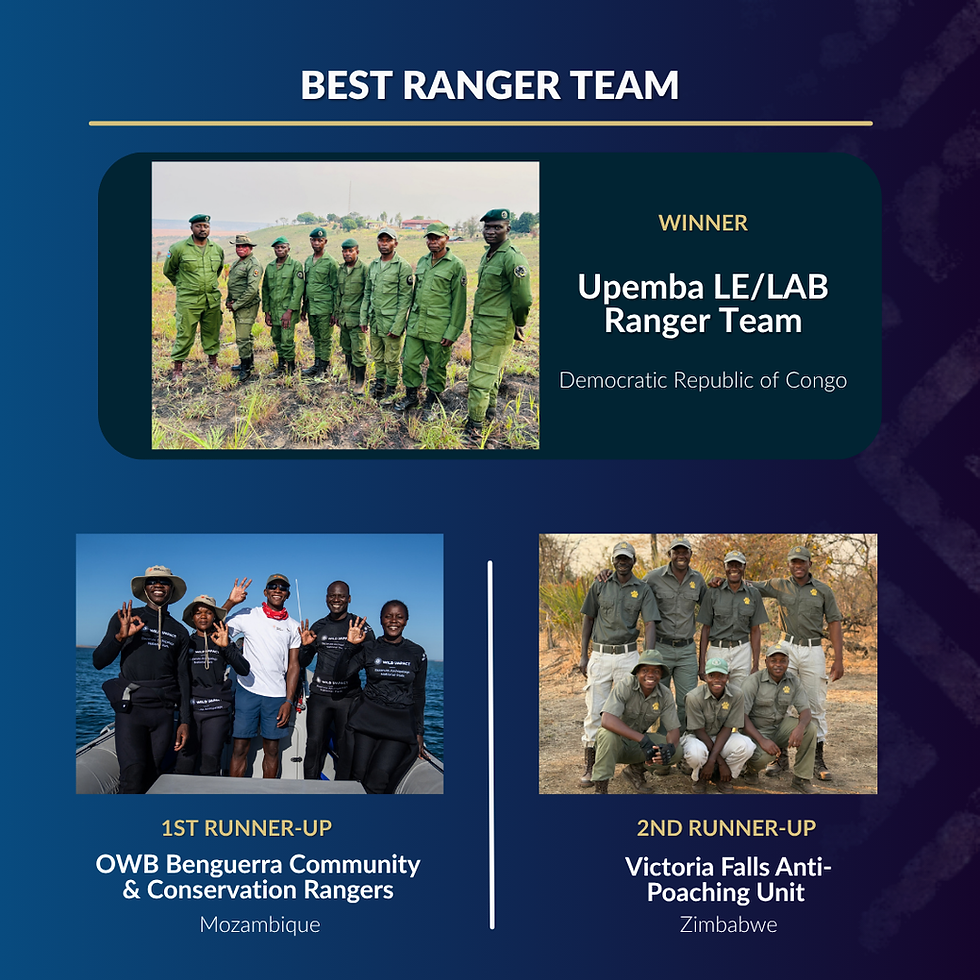
Efforts on the ground are gradually redefining what it means to protect forests in such a complex environment. Community outreach programs are strengthening awareness of ecological value while offering practical pathways toward sustainable resource use. Ranger patrols are not only safeguarding biodiversity but also reinforcing the rule of law in areas where forests are most vulnerable. At the same time, partnerships with local stakeholders are fostering dialogue around land use, encouraging solutions that balance conservation priorities with human needs. These actions, though incremental, represent a shift toward a model where forests are preserved not in isolation from people, but in partnership with them.
Upemba’s forests also play a role that extends far beyond its boundaries. As part of the broader Congo Basin, they contribute to one of the largest carbon sinks on the planet, helping to regulate global climate systems. Their preservation is therefore not only a national or regional concern, but a global responsibility. Every hectare protected, every degradation prevented, becomes part of a larger effort to maintain ecological stability in the face of accelerating climate change.

The International Day of Forests is often a moment of celebration, but it is equally a moment of reckoning. It asks us to look beyond the symbolism of trees and consider the systems they anchor and the futures they shape. In Upemba, that future is still being written – through conservation strategies that evolve, through communities that adapt, and through ecosystems that, despite pressure, continue to endure.
To protect forests here is to invest in continuity: of water flowing through landscapes, of species moving across habitats, of communities building sustainable livelihoods, and of a climate system that depends, in part, on the quiet strength of places like Upemba. Forests may not speak, but in Upemba, they tell a story of interdependence – one that this year’s theme urges us not only to understand, but to act upon.



Comments