
The Sooty Chat: A Grassland Sentinel of Upemba

In the open grasslands and savannas of Africa, where the horizon is broken by scattered shrubs and towering termite mounds, the Sooty Chat (Myrmecocichla nigra) holds quiet watch. Stocky and alert, this 15–16 cm songbird is a familiar presence in landscapes much like those found across the vast plains of Upemba National Park. Its preference for open habitats with low herbage makes Upemba’s mosaics of grassland, savanna, and lightly cultivated annex zones an ideal setting for this understated yet ecologically important species.

The Sooty Chat is best known for its striking sexual dimorphism. Adult males are cloaked in glossy black, a plumage made even more distinctive by a conspicuous white patch on the upper wings that often catches the light when the bird is perched. Females and younger birds, by contrast, wear a more uniform very dark brown and lack the bold wing marking, blending seamlessly into the earth-toned grasslands they inhabit. This subtle difference reflects a life shaped by both display and discretion in open environments.
Behaviorally, the Sooty Chat is a bird of posture and presence. It often adopts an upright stance atop termite mounds, low bushes, or fence posts, using these vantage points to scan for prey and rivals alike. From there, it drops to the ground to forage, running and hopping with purpose as it probes the soil for insects. Its voice adds another layer to its character: a melodious mix of whistles and trills, enriched by an impressive ability to mimic the calls of other birds. In the soundscape of places like Upemba, this vocal versatility weaves the Sooty Chat into a broader chorus of grassland life.
Ecologically, the species plays a valuable role in maintaining balance within these open systems. As a primarily insectivorous bird, it feeds on termites, ants, beetles, grasshoppers, caterpillars, and other small invertebrates. In doing so, it helps regulate insect populations, a service that benefits both natural ecosystems and nearby agricultural areas around protected landscapes such as Upemba. Although insects dominate its diet, the Sooty Chat occasionally consumes seeds and berries, inadvertently contributing to seed dispersal and the regeneration of grassland vegetation.
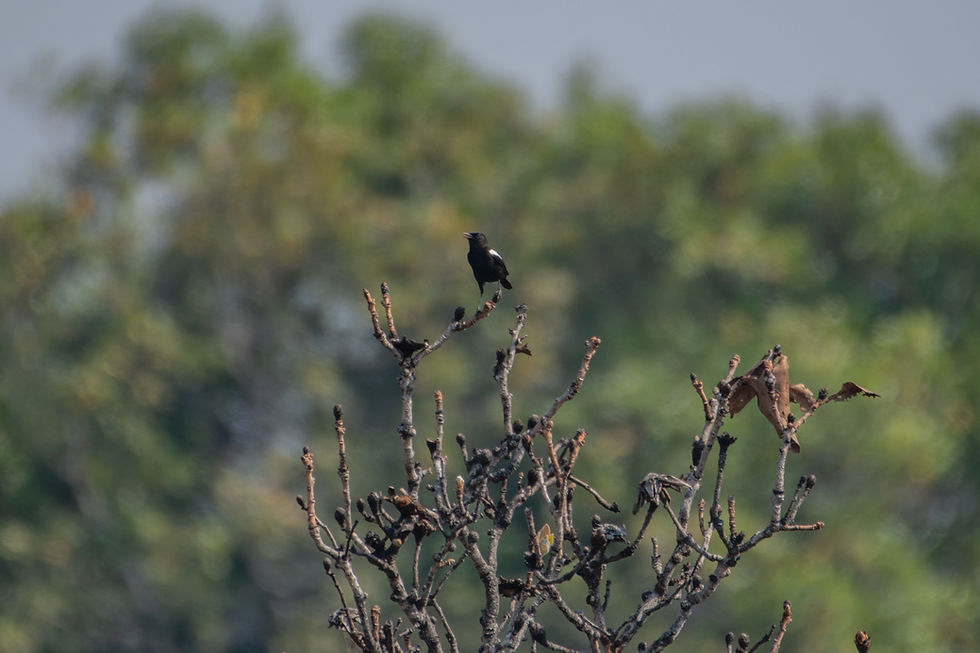
The Sooty Chat also occupies an important place in the food web. As a mid-level consumer, it transfers energy upward, serving as prey for raptors, snakes, and small carnivores. This interconnected role highlights how even common birds underpin the stability of grassland ecosystems. Currently listed as Least Concern on the IUCN Red List, the Sooty Chat remains widespread and relatively stable, yet its continued presence depends on the conservation of open habitats.
In Upemba National Park, species like the Sooty Chat remind us that conservation is not only about the rare and iconic, but also about the everyday birds that quietly sustain ecological processes. Perched on a termite mound against the wide Katanga sky, the Sooty Chat stands as a small but steadfast sentinel of healthy grasslands.
Images: Chris Boyes - Upemba National Park 2024


Comments